

Hey there! I'm a supplier of Aluminum Alloy Guide Rails, and today I wanna talk about the thermal expansion coefficient of these bad boys.
So, what exactly is the thermal expansion coefficient? Well, it's a measure of how much a material expands or contracts when its temperature changes. In simple terms, when things get hot, they usually expand, and when they cool down, they shrink. The thermal expansion coefficient tells us just how much that expansion or contraction is.
Now, let's dive into aluminum alloy guide rails. Aluminum alloys are widely used in all sorts of industries, especially in the photovoltaic field. You can check out our Aluminum Alloy Guide Rail on our website to see the high - quality products we offer.
The thermal expansion coefficient of aluminum alloy guide rails is an important factor to consider. Different aluminum alloys have different thermal expansion coefficients. Generally, the linear thermal expansion coefficient of common aluminum alloys ranges from about 22×10⁻⁶ /°C to 24×10⁻⁶ /°C. This means that for every one - degree Celsius increase in temperature, a one - meter - long aluminum alloy guide rail will expand by about 22 to 24 micrometers.
Why is this important? Well, in applications where precision is key, such as in solar panel mounting systems, the thermal expansion of the guide rails can have a significant impact. For example, in a large - scale solar power plant, there are numerous solar panels mounted on guide rails. If the guide rails expand too much due to temperature changes, it can cause misalignment of the solar panels. This misalignment can reduce the efficiency of the solar panels as they may not be facing the sun at the optimal angle.
Our Solar Mounting Rail Solar Panel Mounting Rail Aluminum Alloy Rail is designed to take these thermal expansion issues into account. We use high - quality aluminum alloys with relatively stable thermal expansion coefficients. This ensures that even under extreme temperature conditions, the guide rails can maintain their structural integrity and keep the solar panels properly aligned.
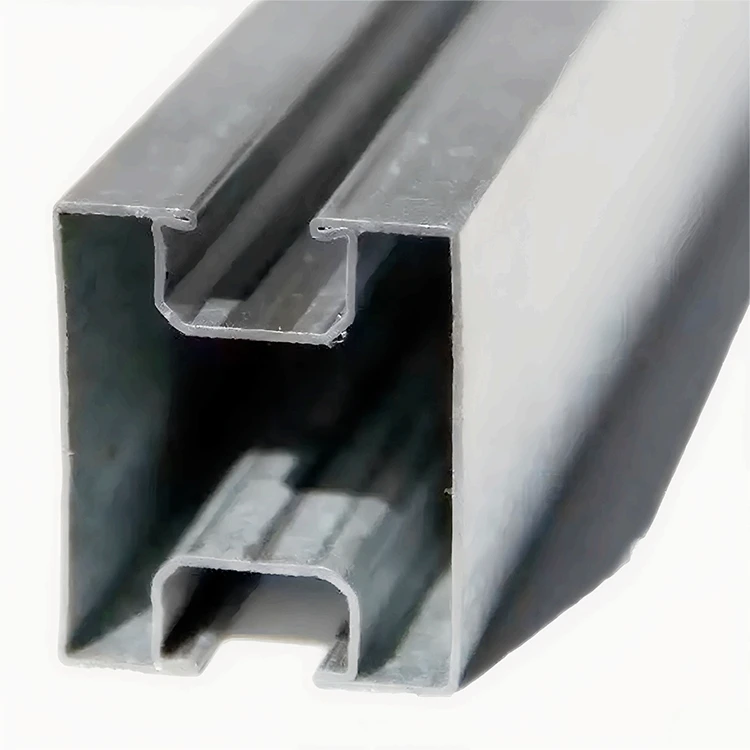
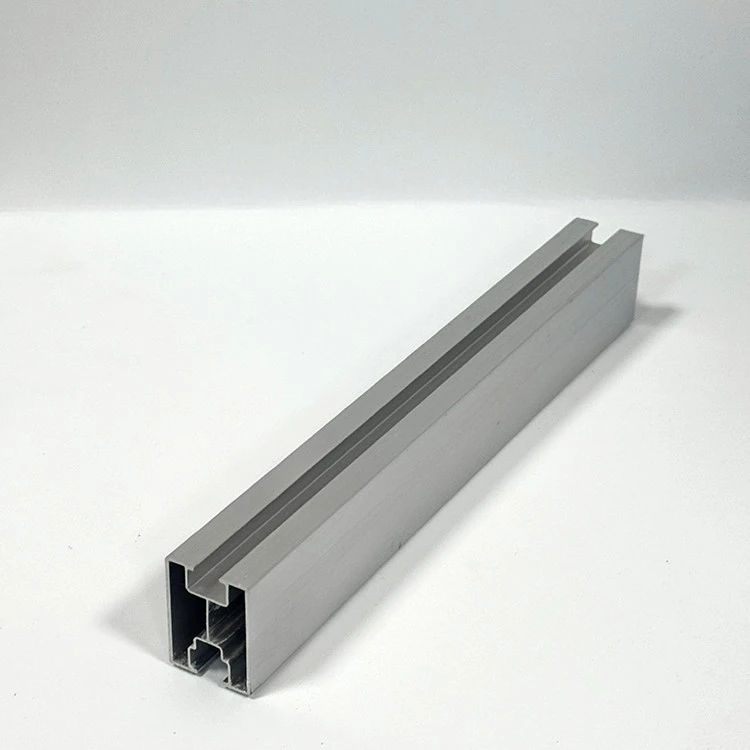
Another aspect to consider is the long - term durability of the guide rails. Over time, repeated expansion and contraction due to temperature changes can cause stress on the guide rails. If the thermal expansion coefficient is too high, it can lead to fatigue and eventually damage the guide rails. That's why we pay close attention to the selection of aluminum alloys for our guide rails.
We also offer Zinc - Aluminum - Magnesium Guide Rail. This type of guide rail has some unique properties. The addition of zinc, aluminum, and magnesium can improve the corrosion resistance and mechanical properties of the guide rail. And when it comes to thermal expansion, it also has a relatively suitable coefficient for most applications.
When installing aluminum alloy guide rails, it's crucial to leave some room for expansion. This can be done by using expansion joints or allowing for some flexibility in the mounting structure. If you don't account for thermal expansion, you might end up with bent or damaged guide rails, which can be a real headache.
In addition to solar panel mounting, aluminum alloy guide rails are also used in other industries such as machinery manufacturing and transportation. In machinery, the thermal expansion of guide rails can affect the accuracy of the moving parts. For example, in a CNC machine, if the guide rails expand or contract too much, it can lead to errors in the machining process.
So, if you're in the market for high - quality aluminum alloy guide rails, you've come to the right place. We've got the expertise and the products to meet your needs. Whether you're building a small - scale solar power system or a large - scale industrial machine, our guide rails are designed to perform under various temperature conditions.
If you're interested in our products, we'd love to have a chat with you about your specific requirements. We can discuss the best type of guide rail for your application, taking into account factors like thermal expansion, load - bearing capacity, and corrosion resistance. Don't hesitate to reach out and start a conversation about your purchase. We're here to help you make the right choice for your project.
References:
- "Materials Science and Engineering: An Introduction" by William D. Callister Jr. and David G. Rethwisch
- Industry reports on photovoltaic system materials and aluminum alloy applications