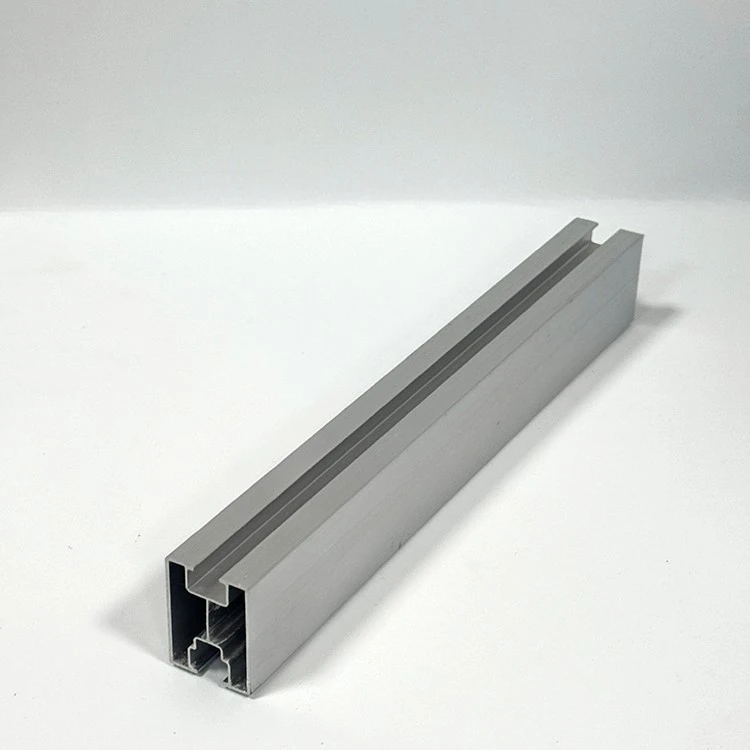
As a guide rail supplier, I often encounter customers who are confused about the differences between cast iron and steel guide rails. In this blog post, I'll delve into the key disparities between these two types of guide rails, helping you make an informed decision when it comes to your specific needs.
Material Composition and Manufacturing Process
Cast iron is an alloy primarily composed of iron, carbon, and silicon, with carbon content typically ranging from 2% to 4%. The high carbon content gives cast iron its characteristic hardness and brittleness. It is produced through a casting process, where molten iron is poured into a mold and allowed to solidify. This process allows for the creation of complex shapes and intricate designs, making cast iron guide rails suitable for applications where precision and customizability are required.
On the other hand, steel is an alloy of iron and carbon, with carbon content usually less than 2%. Steel can also contain other elements such as manganese, chromium, and nickel, which enhance its strength, toughness, and corrosion resistance. Steel guide rails are typically manufactured through a rolling or forging process, which involves shaping the steel under high pressure. This process results in a more uniform and dense structure, giving steel guide rails superior mechanical properties compared to cast iron.
Mechanical Properties
One of the most significant differences between cast iron and steel guide rails lies in their mechanical properties. Cast iron is known for its high hardness and wear resistance, making it suitable for applications where there is a lot of friction and abrasion. However, cast iron is also brittle and has a relatively low tensile strength, which means it is more prone to cracking and breaking under stress.
Steel, on the other hand, has a higher tensile strength and toughness than cast iron, making it more resistant to deformation and fracture. Steel guide rails can withstand higher loads and stresses without failing, making them ideal for heavy-duty applications such as machine tools, industrial automation, and transportation systems. Additionally, steel has better fatigue resistance than cast iron, which means it can withstand repeated loading and unloading cycles without losing its mechanical properties.
Machinability
Another important factor to consider when choosing between cast iron and steel guide rails is their machinability. Cast iron is relatively easy to machine due to its high graphite content, which acts as a lubricant and reduces friction during the machining process. Cast iron can be easily drilled, milled, and turned using conventional machining methods, making it a popular choice for applications where precision machining is required.
Steel, on the other hand, is more difficult to machine than cast iron due to its higher strength and hardness. Steel requires more powerful cutting tools and higher cutting speeds to achieve the same level of precision as cast iron. However, advances in machining technology have made it possible to machine steel guide rails with high accuracy and efficiency, making steel a viable option for a wide range of applications.
Corrosion Resistance
Corrosion resistance is an important consideration for guide rails, especially in applications where they are exposed to harsh environments or corrosive substances. Cast iron is prone to corrosion due to its high carbon content and the presence of graphite, which can act as a cathode and accelerate the corrosion process. Cast iron guide rails require regular maintenance and protection to prevent corrosion, such as painting, coating, or galvanizing.
Steel, on the other hand, can be made highly corrosion-resistant by adding alloying elements such as chromium, nickel, and molybdenum. Stainless steel, in particular, is known for its excellent corrosion resistance and is widely used in applications where corrosion is a major concern, such as food processing, chemical manufacturing, and marine environments. Steel guide rails can also be coated or treated to enhance their corrosion resistance, making them suitable for a variety of applications.
Cost
Cost is often a major factor when choosing between cast iron and steel guide rails. Cast iron is generally less expensive than steel due to its lower material cost and simpler manufacturing process. Cast iron guide rails are a cost-effective option for applications where high precision and wear resistance are not critical, such as in some consumer products and light industrial applications.
Steel, on the other hand, is more expensive than cast iron due to its higher material cost and more complex manufacturing process. However, the superior mechanical properties and corrosion resistance of steel guide rails often justify the higher cost, especially in applications where reliability and durability are essential.
Applications
The choice between cast iron and steel guide rails depends on the specific requirements of the application. Cast iron guide rails are commonly used in applications where high precision and wear resistance are required, such as in machine tools, measuring instruments, and printing presses. Cast iron guide rails are also suitable for applications where vibration damping is important, such as in optical equipment and semiconductor manufacturing.
Steel guide rails, on the other hand, are widely used in heavy-duty applications where high strength, toughness, and corrosion resistance are required, such as in industrial automation, transportation systems, and construction equipment. Steel guide rails are also suitable for applications where high-speed movement and precision positioning are required, such as in robotics and aerospace.
Conclusion
In conclusion, cast iron and steel guide rails have their own unique advantages and disadvantages. Cast iron is known for its high hardness, wear resistance, and ease of machining, making it suitable for applications where precision and customizability are required. Steel, on the other hand, has superior mechanical properties, corrosion resistance, and fatigue resistance, making it ideal for heavy-duty applications where reliability and durability are essential.
As a guide rail supplier, we offer a wide range of cast iron and steel guide rails to meet the diverse needs of our customers. Whether you need a high-precision cast iron guide rail for a machine tool or a heavy-duty steel guide rail for an industrial automation system, we have the expertise and experience to provide you with the right solution.
If you're interested in learning more about our guide rails or have any questions about the differences between cast iron and steel guide rails, please don't hesitate to contact us. We look forward to working with you to find the perfect guide rail solution for your application.
References
- ASM Handbook, Volume 1: Properties and Selection: Irons, Steels, and High-Performance Alloys
- Machinery's Handbook, 31st Edition
- Guide Rail Design and Application Manual
Related Products
- Solar Panel Aluminum Guide Rail
- Solar Mounting Rail Solar Panel Mounting Rail Aluminum Alloy Rail
- Aluminum Alloy Guide Rail
Are you in need of high-quality guide rails for your project? Contact us today to discuss your requirements and explore our wide range of products. Our team of experts is ready to assist you in finding the perfect solution for your application.