

Hey there! As a guide rail supplier, I often get asked about the parallelism requirement for multiple guide rails. It's a crucial aspect, especially when it comes to various applications, from industrial machinery to solar panel installations. So, let's dive right into it!
Why Parallelism Matters
First off, you might be wondering why parallelism is such a big deal. Well, when multiple guide rails are used together, they need to be parallel to ensure smooth and efficient operation. Think about it like the tracks of a train. If the tracks aren't parallel, the train will have a bumpy ride, and there's a high risk of derailment. The same goes for guide rails.
In industrial settings, parallel guide rails are essential for the proper functioning of conveyor systems, automated machinery, and robotic arms. These systems rely on the precise movement of components along the guide rails. If the rails aren't parallel, it can lead to increased wear and tear on the moving parts, reduced accuracy in positioning, and even system failures.
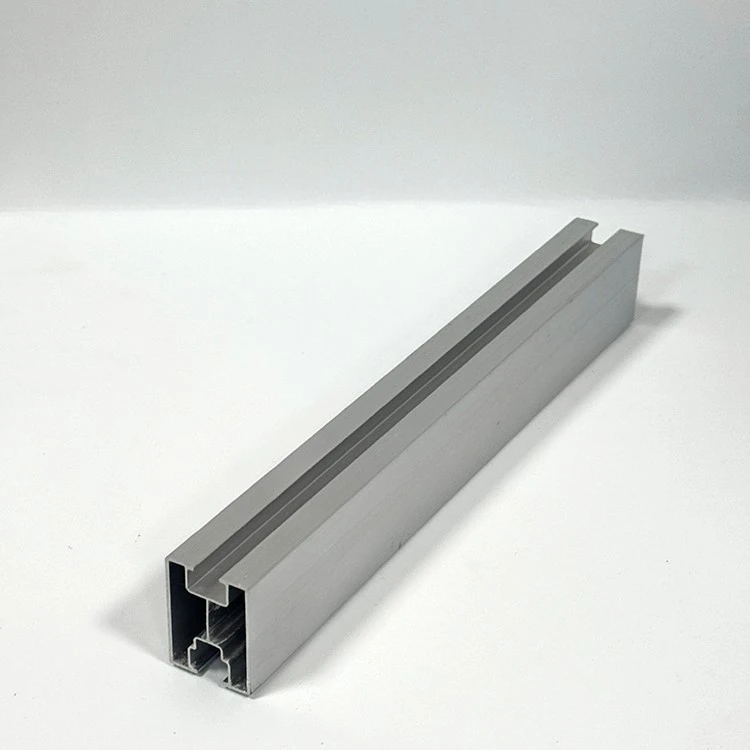
In the solar energy sector, parallel guide rails are used to mount solar panels. For instance, the Solar Mounting Rail Solar Panel Mounting Rail Aluminum Alloy Rail needs to be installed in parallel to ensure that the solar panels are properly aligned. This alignment is crucial for maximizing the amount of sunlight that the panels can capture, which in turn increases the efficiency of the solar power system.
Measuring Parallelism
Now that we understand why parallelism is important, let's talk about how to measure it. There are several methods available, and the choice of method depends on the specific application and the level of accuracy required.
One common method is using a straightedge and a feeler gauge. A straightedge is placed along one of the guide rails, and the feeler gauge is used to measure the gap between the straightedge and the other guide rail at various points. If the gap is consistent along the entire length of the rails, then they are parallel. However, this method is relatively low-tech and may not be suitable for applications that require high precision.
For more accurate measurements, laser alignment systems can be used. These systems use lasers to project a straight line onto the guide rails, and sensors are used to measure the distance between the laser line and the rails at different points. Laser alignment systems can provide very precise measurements, making them ideal for applications where tight tolerances are required.
Tolerance Levels
When it comes to parallelism, there are specific tolerance levels that need to be met. These tolerance levels vary depending on the application. For example, in a simple conveyor system, a relatively large tolerance may be acceptable, while in a high-precision robotic arm, the tolerance needs to be much smaller.
In general, the tolerance for parallelism is specified in terms of distance per unit length. For example, a tolerance of ±0.1 mm per meter means that the deviation from parallelism should not exceed 0.1 mm over a length of one meter. It's important to note that these tolerance levels are not arbitrary; they are determined based on the requirements of the specific application.
Factors Affecting Parallelism
There are several factors that can affect the parallelism of multiple guide rails. One of the main factors is the installation process. If the guide rails are not installed correctly, it can lead to misalignment. This can happen if the mounting surface is not flat or if the rails are not tightened properly.
Another factor is thermal expansion. As the temperature changes, the guide rails can expand or contract. If the expansion or contraction is not uniform across all the rails, it can cause them to become misaligned. This is especially important in applications where the guide rails are exposed to significant temperature variations, such as outdoor solar panel installations.

Material properties can also play a role. Different materials have different coefficients of thermal expansion, and if multiple guide rails are made of different materials, it can lead to differences in expansion and contraction, which can affect parallelism.
Our Guide Rail Solutions
At our company, we offer a wide range of guide rails to meet different application requirements. Our Aluminum Alloy Guide Rail is lightweight, corrosion-resistant, and has excellent mechanical properties. It's a popular choice for many applications, including solar panel mounting and industrial machinery.
We also have the Zinc-Aluminum-Magnesium Guide Rail, which offers superior corrosion resistance and high strength. This type of guide rail is ideal for outdoor applications where the rails are exposed to harsh environmental conditions.
When it comes to parallelism, we take every precaution to ensure that our guide rails meet the required tolerance levels. Our manufacturing process includes strict quality control measures, and we use advanced measurement techniques to verify the parallelism of our guide rails before they are shipped to our customers.
Contact Us for Your Guide Rail Needs
If you're in the market for high-quality guide rails and need help with understanding the parallelism requirements for your specific application, don't hesitate to get in touch with us. We have a team of experts who can provide you with the guidance and support you need. Whether you're a small business looking for a simple conveyor system or a large solar energy company planning a major installation, we have the right guide rail solutions for you.
In conclusion, parallelism is a critical factor when it comes to using multiple guide rails. By understanding the importance of parallelism, measuring it accurately, and ensuring that the guide rails meet the required tolerance levels, you can ensure the smooth and efficient operation of your systems. So, if you have any questions or need to discuss your guide rail requirements, reach out to us today!
References
- Machinery's Handbook, 31st Edition
- ASME B5.54 - 2005, Performance Standard for Computer Numerically Controlled Machining Centers
- ISO 230 - 1:2012, Test code for machine tools - Part 1: Geometric accuracy of machines operating under no-load or finishing conditions