

What is the maximum bending angle of steel pipes?
As a dedicated steel pipe supplier, I often get inquiries about various aspects of steel pipes, and one question that comes up quite frequently is, "What is the maximum bending angle of steel pipes?" This seemingly simple question has a rather complex answer, which depends on multiple factors we're about to explore.
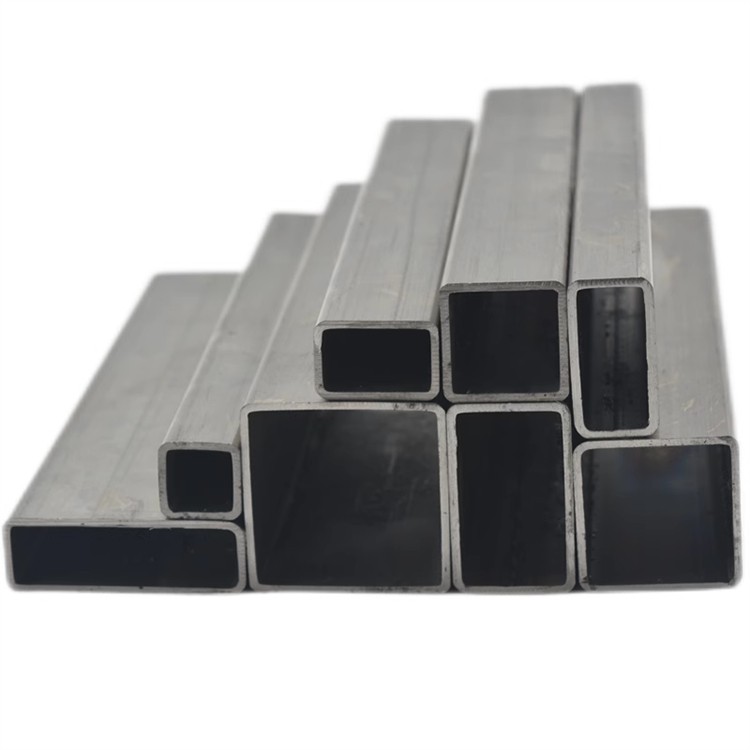
Before getting into the details of the maximum bending angle, it's crucial to understand the fundamental types of steel pipes we offer. Rectangular Steel Pipe is a popular option for those in need of pipes with straight - edged cross - sections, commonly used in construction and frame building. China Longitudinal Welded Steel Pipe Q195 - Q345 is well - known for its reliable strength and cost - effectiveness, making it a staple in many industrial applications. And HDG Square Steel Pipe, with its hot - dipped galvanized coating, offers excellent corrosion resistance, ideal for outdoor and high - moisture environments.
The maximum bending angle of steel pipes isn't a fixed value. It's influenced by a range of factors. Firstly, the material of the steel pipe plays a significant role. Different grades of steel have different mechanical properties. For instance, a high - strength alloy steel pipe is likely to be more resistant to deformation and can potentially withstand larger bending angles compared to a low - carbon steel pipe. The carbon content in steel affects its ductility and hardness. Low - carbon steel with less than 0.3% carbon content is relatively more ductile, which means it can be bent to a greater degree before cracking. However, as the carbon content increases, the steel becomes harder and less ductile, restricting the maximum bending angle.
The wall thickness of the steel pipe is another critical factor. A thicker - walled steel pipe is generally stiffer and can maintain its shape better under bending loads. But this also means that it requires more force to bend, and there's a limit to how much it can be bent before the outer surface starts to crack or the inner surface begins to buckle. On the other hand, a thinner - walled pipe is more flexible and easier to bend, but it may be prone to wrinkling or collapsing during the bending process.
The diameter of the steel pipe also impacts the maximum bending angle. Larger - diameter pipes are more difficult to bend because the force required to deform them increases with the diameter. The outer fibers of a large - diameter pipe have to stretch a greater distance during bending, which can lead to cracking at lower bending angles compared to smaller - diameter pipes.

The bending method is yet another determinant. There are several ways to bend steel pipes, such as cold bending and hot bending. Cold bending is done at room temperature and is suitable for pipes with relatively small bending radii and diameters. In cold bending, the steel pipe's material properties remain relatively unchanged, but the process requires more force. The maximum bending angle in cold bending is limited to prevent excessive work hardening, which can make the pipe brittle.
Hot bending, on the contrary, involves heating the steel pipe to a high temperature, usually within the range of 800 - 1200°C. At this elevated temperature, the steel becomes more malleable, allowing for larger bending angles. The heat softens the steel, reducing the force needed for bending and minimizing the risk of cracking. However, hot bending requires specialized equipment and careful control of the heating process to ensure uniform heating and prevent over - heating, which can damage the pipe's internal structure and mechanical properties.
In practical applications, the maximum bending angle also needs to meet certain engineering requirements and standards. For example, in the construction of pipelines for transporting fluids, the bending angle should not be so large as to cause excessive pressure drops or flow disturbances. In structural applications, the bent steel pipes must still be able to bear the designed loads without failure.
To estimate the maximum bending angle of a specific steel pipe, engineers often use mathematical models and empirical formulas. These take into account the material properties, dimensions of the pipe, and the bending method. For example, the calculation may involve equations that relate the yield strength, modulus of elasticity, and the geometric parameters of the pipe to the maximum allowable strain during bending. Based on these calculations, a safe and appropriate bending angle can be determined.
In some industries, testing and experimentation are carried out to find the maximum bending angle for a particular type of steel pipe. Sample pipes are bent incrementally until they reach the point of failure, and the corresponding bending angle is recorded. This data can then be used as a reference for future projects and for quality control.
As a steel pipe supplier, I understand the importance of providing accurate information about the maximum bending angle of our products to our customers. We have a team of experts who are well - versed in the mechanical properties of different types of steel pipes and can offer professional advice on bending operations. Whether you're working on a small - scale DIY project or a large - scale industrial construction, we can help you select the right steel pipe and determine the appropriate bending angle based on your specific needs.
If you're interested in purchasing steel pipes from us, whether it's Rectangular Steel Pipe, China Longitudinal Welded Steel Pipe Q195 - Q345, or HDG Square Steel Pipe, we're here to assist you. We can provide detailed product specifications, bending guidelines, and support throughout your project. Don't hesitate to reach out to us for procurement and further discussions about your steel pipe requirements. Our knowledge and experience in the steel pipe industry ensure that you'll get high - quality products and reliable service.
References
- Timoshenko, S. P., & Goodier, J. N. (1970). Theory of Elasticity. McGraw - Hill.
- ASME B31.3 - Process Piping Code. American Society of Mechanical Engineers.
- ASTM Standards for Steel Pipes. American Society for Testing and Materials.