

Yo, folks! As a supplier of spiral steel pipes, I often get asked about all sorts of technical stuff related to these pipes. One question that pops up quite a bit is, "What is the elongation of spiral steel pipes?" Well, let's dive right into it.
Understanding Elongation
Elongation is basically a measure of how much a material can stretch before it breaks. In the context of spiral steel pipes, it's super important because it tells us a lot about the pipe's ductility. Ductility is the ability of a material to deform plastically under tensile stress without fracturing.
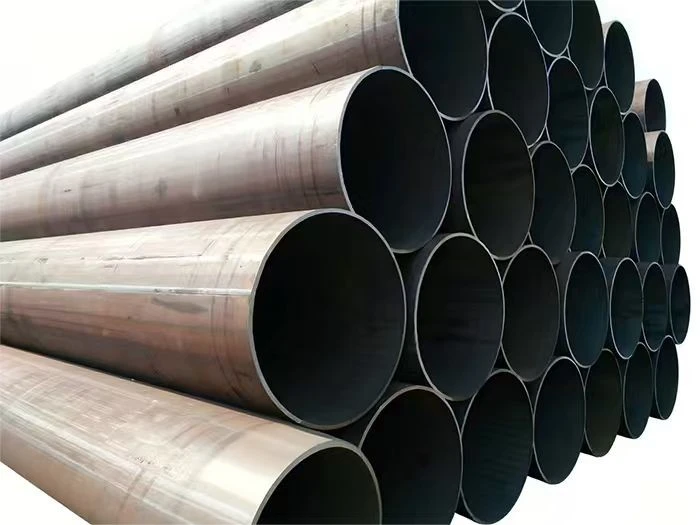

When we talk about the elongation of spiral steel pipes, we're usually referring to the percentage increase in length of a specimen of the pipe material when it's pulled to the point of fracture during a tensile test. This test is a standard way to evaluate the mechanical properties of metals, including steel.
Let's say we have a sample of spiral steel pipe. We mark a specific length on it, usually called the gauge length. Then we put the sample in a tensile testing machine, which slowly pulls the sample until it breaks. After the break, we measure the new length of the gauge section. The difference between the original length and the final length, divided by the original length and multiplied by 100, gives us the elongation percentage.
Why Elongation Matters
Now, you might be wondering why elongation is such a big deal. Well, for starters, it's a key indicator of the pipe's quality and performance. A higher elongation percentage generally means the steel is more ductile. This is crucial in applications where the pipes might be subjected to bending, stretching, or other forms of deformation.
For example, in oil and gas pipelines, the pipes need to be able to withstand ground movement, temperature changes, and other external forces. A pipe with good elongation can bend and stretch a bit without cracking, which helps prevent leaks and failures.
In construction projects, spiral steel pipes are often used for structural purposes. If the pipes have low elongation, they might be more prone to brittle fracture under stress, which can compromise the safety of the entire structure.
Factors Affecting Elongation
There are several factors that can affect the elongation of spiral steel pipes. One of the most important is the chemical composition of the steel. Different elements in the steel, such as carbon, manganese, and silicon, can have a significant impact on its mechanical properties, including elongation.
Carbon is a key element in steel. Generally, as the carbon content increases, the strength of the steel goes up, but the elongation decreases. That's because carbon atoms can form hard carbide particles in the steel, which make it more brittle. So, when choosing the right steel for spiral pipes, we need to find a balance between strength and elongation.
The manufacturing process also plays a big role. Spiral steel pipes are made by continuously bending a steel strip into a spiral shape and then welding the edges together. The quality of the welding can affect the elongation of the final pipe. If the welding is not done properly, it can introduce defects or stress concentrations in the pipe, which can reduce its elongation.
Heat treatment is another factor. By heating and cooling the steel in a controlled way, we can change its microstructure and improve its mechanical properties. For example, annealing can make the steel more ductile and increase its elongation.
Comparing with Other Types of Steel Pipes
It's also interesting to compare the elongation of spiral steel pipes with other types of steel pipes, like Straight Seam Steel Pipe and Rectangular Steel Pipe.
Straight seam steel pipes are made by welding a single longitudinal seam. In general, they can have different elongation characteristics compared to spiral steel pipes. The straight seam welding process might introduce different stress patterns in the pipe, which can affect its elongation. However, both types of pipes can be designed and manufactured to meet specific elongation requirements depending on the application.
Rectangular steel pipes, on the other hand, have a different shape and cross - section. The corners of the rectangular shape can introduce stress concentrations, which might reduce the overall elongation compared to circular spiral steel pipes. But again, proper design and manufacturing techniques can help optimize the elongation of rectangular pipes.
Elongation and Galvanized Pipes
We also supply Erw Galvanized Pipe, and the elongation of these pipes is also an important consideration. Galvanizing is a process of coating the steel pipe with a layer of zinc to protect it from corrosion.
The galvanizing process itself doesn't usually have a major impact on the elongation of the steel pipe. However, if the zinc coating is too thick or if there are issues with the adhesion of the coating, it could potentially affect the pipe's performance under stress. For example, if the zinc coating cracks during deformation, it might expose the underlying steel to corrosion.
Meeting Industry Standards
In the industry, there are specific standards and requirements for the elongation of spiral steel pipes. These standards are set to ensure the pipes are safe and reliable for different applications. For example, in the oil and gas industry, pipes need to meet certain minimum elongation values to be used in pipelines.
As a supplier, we make sure that all our spiral steel pipes meet or exceed these industry standards. We conduct regular quality control tests, including tensile tests, to check the elongation and other mechanical properties of our pipes. This way, our customers can be confident that they're getting high - quality pipes that will perform well in their projects.
Contact Us for Your Spiral Steel Pipe Needs
If you're in the market for spiral steel pipes, whether it's for a small construction project or a large - scale industrial application, we're here to help. We offer a wide range of spiral steel pipes with different specifications, including varying levels of elongation to meet your specific requirements.
Don't hesitate to reach out to us if you have any questions about the elongation of our pipes or if you need advice on choosing the right pipes for your project. We're always happy to have a chat and help you find the best solution.
References
- ASTM International. (20XX). Standard specifications for steel pipes.
- American Petroleum Institute. (20XX). Pipeline standards and guidelines.
- Steel Manufacturing Handbook. (20XX). Industry - specific knowledge on steel properties and manufacturing.