

When it comes to the world of steel pipes, two prominent types stand out: spiral steel pipes and straight-seam steel pipes. As a supplier of spiral steel pipes, I've had the privilege of witnessing firsthand the unique characteristics, applications, and differences between these two types of pipes. In this blog, I'll delve into the details to help you understand which type might be the best fit for your specific needs.
Manufacturing Process
The fundamental difference between spiral steel pipes and straight-seam steel pipes lies in their manufacturing processes.
Straight-seam steel pipes, as the name suggests, are produced by rolling a steel plate into a cylindrical shape and then welding the seam along the length of the pipe. This straightforward process results in a single, straight weld that runs the entire length of the pipe. You can find more information about Straight Seam Steel Pipe.
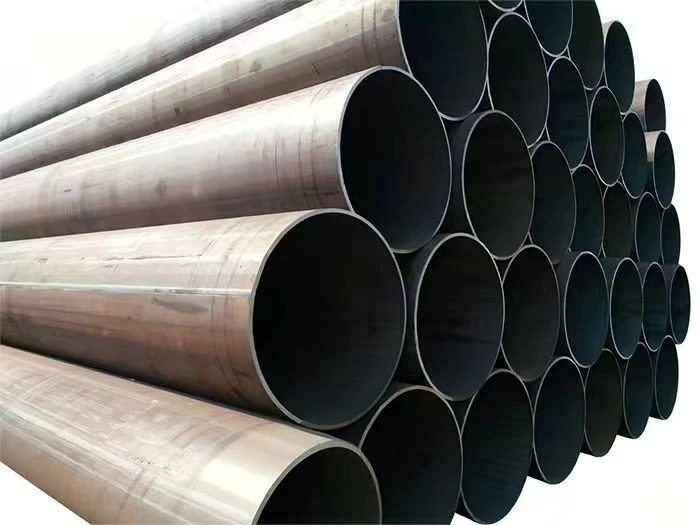

On the other hand, spiral steel pipes are manufactured by continuously bending a steel strip in a spiral shape and then welding the overlapping edges. This creates a helical weld that spirals around the pipe. The spiral welding process allows for the production of pipes with larger diameters and longer lengths compared to straight-seam steel pipes.
Structural Integrity
The welding process significantly impacts the structural integrity of the pipes. Straight-seam steel pipes have a single, straight weld, which can be advantageous in applications where a high degree of straightness and precision are required. The straight weld provides a uniform stress distribution along the length of the pipe, making it suitable for applications such as high-pressure pipelines and structural supports.
In contrast, the helical weld of spiral steel pipes distributes stress more evenly around the circumference of the pipe. This makes spiral steel pipes more resistant to external forces, such as soil pressure and seismic activity. Additionally, the spiral weld provides a greater surface area for welding, which can result in a stronger joint. As a result, spiral steel pipes are often used in applications where the pipe will be subjected to high external pressures or uneven loads, such as in oil and gas pipelines and offshore structures.
Diameter and Wall Thickness
Another significant difference between spiral steel pipes and straight-seam steel pipes is their diameter and wall thickness capabilities. Straight-seam steel pipes are typically limited in terms of diameter and wall thickness due to the size of the steel plates used in their manufacturing. As a result, they are more commonly used in applications where smaller diameters and thinner wall thicknesses are required, such as in plumbing and HVAC systems.
Spiral steel pipes, on the other hand, can be manufactured with much larger diameters and thicker wall thicknesses. This makes them suitable for applications where large volumes of fluid or gas need to be transported, such as in oil and gas pipelines and water supply systems. The ability to produce larger diameter pipes also reduces the number of joints required in a pipeline, which can improve the overall integrity and efficiency of the system.
Cost
Cost is always an important consideration when choosing between different types of steel pipes. In general, straight-seam steel pipes are more cost-effective for smaller diameter pipes and lower volume applications. The simpler manufacturing process and the use of smaller steel plates result in lower production costs.
However, for larger diameter pipes and high-volume applications, spiral steel pipes can be more cost-effective. The ability to produce larger diameter pipes in a single continuous length reduces the need for additional joints and welding, which can save on labor and material costs. Additionally, the greater structural integrity of spiral steel pipes can reduce the need for additional reinforcement, further reducing overall costs.
Applications
The differences in manufacturing process, structural integrity, diameter, wall thickness, and cost make spiral steel pipes and straight-seam steel pipes suitable for different applications.
Straight-seam steel pipes are commonly used in applications where precision, straightness, and smaller diameters are required. Some common applications include:
- Plumbing and HVAC Systems: Straight-seam steel pipes are often used in residential and commercial plumbing and HVAC systems due to their small diameter and ease of installation.
- Structural Supports: The straightness and uniform stress distribution of straight-seam steel pipes make them ideal for use in structural supports, such as in buildings and bridges.
- Automotive and Machinery: Straight-seam steel pipes are used in the automotive and machinery industries for various components, such as exhaust systems and hydraulic cylinders.
Spiral steel pipes, on the other hand, are commonly used in applications where large diameters, high external pressures, and long lengths are required. Some common applications include:
- Oil and Gas Pipelines: Spiral steel pipes are the preferred choice for long-distance oil and gas pipelines due to their large diameter, high strength, and resistance to external forces.
- Water Supply and Drainage Systems: Spiral steel pipes are used in water supply and drainage systems to transport large volumes of water over long distances.
- Offshore Structures: The high strength and corrosion resistance of spiral steel pipes make them suitable for use in offshore structures, such as oil platforms and wind turbines.
Conclusion
In conclusion, the choice between spiral steel pipes and straight-seam steel pipes depends on a variety of factors, including the specific application, diameter and wall thickness requirements, cost considerations, and structural integrity. As a supplier of spiral steel pipes, I have the expertise and resources to help you choose the right type of pipe for your needs. Whether you're looking for a reliable solution for a small-scale plumbing project or a large-scale oil and gas pipeline, I can provide you with high-quality spiral steel pipes that meet your specifications.
If you're interested in learning more about our spiral steel pipes or have any questions about the differences between spiral steel pipes and straight-seam steel pipes, please don't hesitate to contact me. I'd be happy to discuss your requirements and provide you with a customized solution. Additionally, you can explore other steel products we offer, such as Gi Pipe Seamless and Hollow Section Square Pipe.
Let's work together to find the perfect steel pipe solution for your project.
References
- "Steel Pipe Handbook," American Iron and Steel Institute
- "Welding of Steel Pipes," Welding Journal
- "Structural Design of Steel Pipe Structures," Structural Engineers Association of California