

Hey there! As a supplier of Aluminum Alloy Guide Rails, I often get asked about the creep resistance of these rails. So, I thought I'd take a deep dive into this topic and share what I know.
First off, let's talk about what creep is. Creep is the slow, continuous deformation of a material under a constant load over time. It's kind of like when you leave a heavy book on a soft table, and over time, the table starts to sag. In the case of aluminum alloy guide rails, creep can be a big deal, especially in applications where precision and stability are crucial.
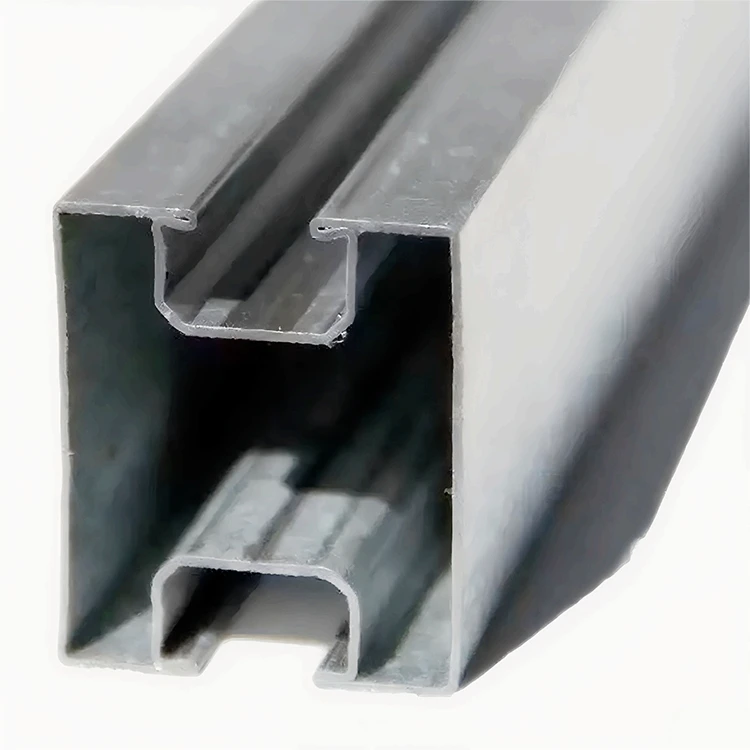
Now, you might be wondering why creep resistance matters for aluminum alloy guide rails. Well, in many industries, these rails are used in machinery and equipment that operate under high loads and for long periods. For example, in the solar energy industry, Solar Mounting Rail Solar Panel Mounting Rail Aluminum Alloy Rail are used to support solar panels. These panels are exposed to various environmental conditions, including wind, snow, and temperature changes. Over time, the constant load from the panels and the environmental factors can cause the rails to creep. If the rails creep too much, it can lead to misalignment of the solar panels, reducing their efficiency and potentially causing damage.
So, what affects the creep resistance of aluminum alloy guide rails? There are several factors at play.
Alloy Composition
The type and amount of alloying elements in the aluminum alloy have a significant impact on its creep resistance. For instance, adding elements like magnesium, silicon, and copper can improve the strength and creep resistance of the alloy. Magnesium, in particular, forms fine precipitates in the aluminum matrix, which help to impede the movement of dislocations and reduce creep. Our Zinc - Aluminum - Magnesium Guide Rail is a great example of an alloy with enhanced creep resistance due to its unique composition.
Heat Treatment
Heat treatment is another crucial factor. Proper heat treatment can change the microstructure of the aluminum alloy, which in turn affects its mechanical properties, including creep resistance. For example, a process called aging can be used to precipitate fine particles in the alloy, which can strengthen the material and improve its resistance to creep. By carefully controlling the heat treatment process, we can optimize the creep resistance of our Solar Panel Aluminum Guide Rail.

Grain Size
The grain size of the aluminum alloy also plays a role in creep resistance. Generally, a finer grain size can lead to better creep resistance. This is because smaller grains have more grain boundaries, which can act as barriers to the movement of dislocations during creep. We use advanced manufacturing techniques to control the grain size of our aluminum alloy guide rails, ensuring optimal creep resistance.
Operating Conditions
The temperature and the magnitude of the applied load are important operating conditions that affect creep. Higher temperatures and larger loads generally increase the rate of creep. In applications where the rails are exposed to high temperatures, such as in some industrial furnaces, it's even more critical to choose an aluminum alloy with high creep resistance.
Now, let's talk about how we test the creep resistance of our aluminum alloy guide rails. We use a variety of testing methods to ensure that our products meet the highest standards. One common method is the constant - load creep test. In this test, a specimen of the aluminum alloy is subjected to a constant load at a specific temperature for a set period. The deformation of the specimen is measured over time, and the creep rate is calculated. We also use advanced microscopy techniques to analyze the microstructure of the alloy before and after the creep test, which helps us understand how the material behaves under creep conditions.
In addition to these standard tests, we also conduct real - world simulations. For example, we simulate the environmental conditions that our Solar Panel Aluminum Guide Rail might encounter in a solar power plant. By subjecting the rails to these simulated conditions, we can get a better understanding of their long - term performance and ensure that they will meet the needs of our customers.
So, why should you choose our aluminum alloy guide rails? Well, our rails are designed and manufactured with a focus on high creep resistance. We use state - of - the - art alloy compositions and advanced manufacturing processes to ensure that our rails can withstand the toughest conditions. Whether you're in the solar energy industry, the automotive industry, or any other field that requires precision and durability, our aluminum alloy guide rails are a great choice.
If you're interested in learning more about our products or have any questions about creep resistance, don't hesitate to reach out. We're always happy to have a chat and help you find the right solution for your needs. Whether you're looking for a specific type of guide rail or need advice on choosing the best option for your application, we're here to assist you. Let's start a conversation and see how we can work together to meet your requirements.
References
- "Aluminum Alloys: Structure and Properties" by John E. Hatch
- "Creep of Engineering Materials" by B. Wilshire and R. W. Evans