

As a supplier of Straight Seam Steel Pipe, I often get asked about how these pipes hold up under high - temperature conditions. In this blog, I'll break down the creep properties of Straight Seam Steel Pipe in high - heat environments.
What is Creep?
Before we dive into the specifics of Straight Seam Steel Pipe, let's quickly go over what creep is. Creep is the slow, progressive deformation of a material over time when it's exposed to a constant load and high temperatures. Unlike normal deformation that happens right away when a load is applied, creep occurs gradually. It's like how a piece of taffy slowly stretches out when you hold it at one end for a long time.
Why High - Temperature Creep Matters for Straight Seam Steel Pipe
Straight Seam Steel Pipe is used in various industries, from oil and gas to power generation. In these industries, the pipes are often subjected to high temperatures and pressures. For example, in a power plant, steam at extremely high temperatures flows through the pipes to generate electricity. If the pipes can't handle the high - temperature creep, it can lead to all sorts of problems, like leaks, pipe failures, and even safety hazards.
Factors Affecting Creep in Straight Seam Steel Pipe
Temperature
The higher the temperature, the faster the creep rate. At elevated temperatures, the atoms in the steel gain more energy and can move more freely. This makes the steel more likely to deform under load. For Straight Seam Steel Pipe, when the temperature exceeds a certain point, the creep becomes a significant concern. For instance, if the pipe is designed to operate at a normal temperature but suddenly gets exposed to a much higher temperature due to a process malfunction, the creep rate can increase rapidly.
Stress
The amount of stress applied to the pipe also plays a crucial role. Higher stress levels mean more force is acting on the steel, which can accelerate the creep process. In industrial applications, the pressure inside the pipe is a major source of stress. If the pressure is too high, the pipe is more likely to experience creep deformation.
Time
Creep is a time - dependent phenomenon. The longer the pipe is exposed to high temperatures and stress, the more it will deform. Even if the creep rate is slow at first, over months or years, the cumulative deformation can be substantial. This is why long - term monitoring of pipes in high - temperature applications is so important.
Creep Mechanisms in Straight Seam Steel Pipe
Dislocation Creep
Dislocations are defects in the crystal structure of the steel. At high temperatures, these dislocations can move more easily. When a load is applied, the dislocations can glide and climb, causing the steel to deform. In Straight Seam Steel Pipe, dislocation creep can lead to a change in the shape of the pipe over time.
Diffusion Creep
At high temperatures, atoms can diffuse through the steel lattice. There are two types of diffusion creep: Nabarro - Herring creep and Coble creep. Nabarro - Herring creep occurs when atoms diffuse through the bulk of the grains, while Coble creep happens along the grain boundaries. Both of these processes can contribute to the overall creep deformation of the pipe.
How to Mitigate Creep in Straight Seam Steel Pipe
Material Selection
Choosing the right steel alloy is crucial. Some alloys are more resistant to high - temperature creep than others. For example, steels with high chromium and nickel content tend to have better creep resistance. These elements form stable compounds in the steel, which can slow down the movement of atoms and dislocations.
Design and Fabrication
Proper design and fabrication can also help reduce creep. For instance, using thicker - walled pipes can increase the pipe's resistance to deformation. Additionally, proper heat treatment during the fabrication process can improve the steel's microstructure and enhance its creep properties.
Comparing with Other Types of Pipes
When it comes to high - temperature applications, it's interesting to compare Straight Seam Steel Pipe with other types of pipes, like Erw Galvanized Pipe and Spiral Steel Pipe.
Erw Galvanized Pipe is coated with zinc to prevent corrosion. While the zinc coating provides good protection against rust, it doesn't necessarily improve the high - temperature creep properties. In fact, the zinc coating can start to degrade at relatively high temperatures, which might affect the overall performance of the pipe.
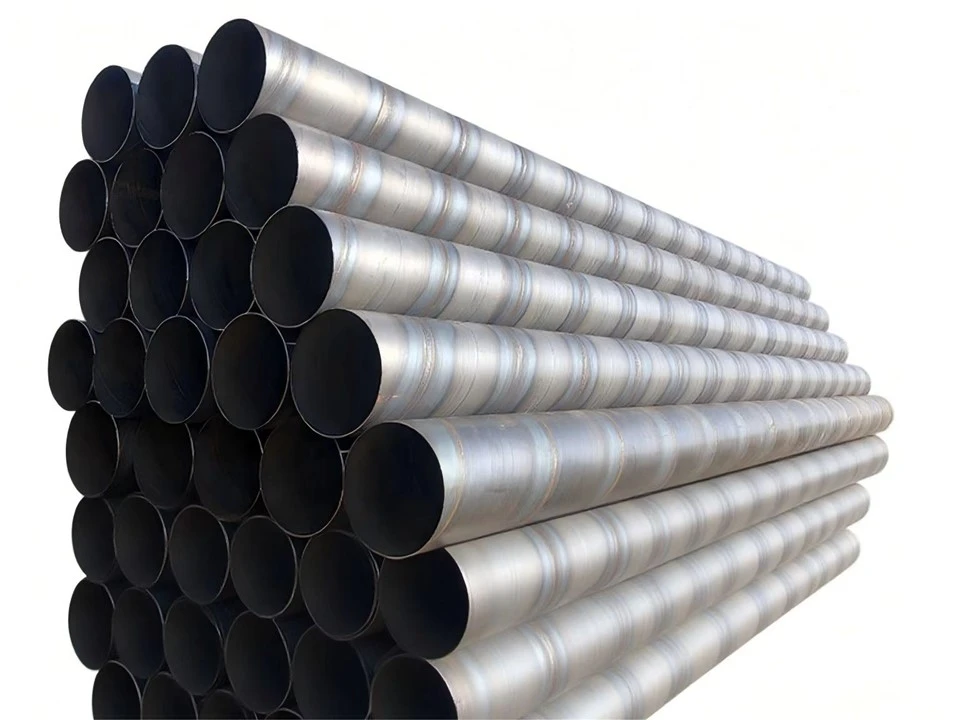

Spiral Steel Pipe is made by spirally welding a steel strip. Its structure is different from Straight Seam Steel Pipe. In high - temperature applications, the spiral weld might be a potential weak point for creep. The stress distribution in a spiral pipe can be more complex compared to a straight - seam pipe, which could lead to different creep behaviors.
Monitoring Creep in Straight Seam Steel Pipe
To ensure the long - term reliability of Straight Seam Steel Pipe in high - temperature applications, regular monitoring is essential. There are several methods for monitoring creep:
Non - Destructive Testing (NDT)
Techniques like ultrasonic testing and eddy - current testing can be used to detect any early signs of creep deformation without damaging the pipe. These methods can measure the thickness of the pipe wall and detect any internal defects that might be related to creep.
Strain Gauges
Strain gauges can be attached to the surface of the pipe to measure the strain over time. By monitoring the strain, we can calculate the creep rate and predict when the pipe might reach its failure point.
Conclusion
In conclusion, understanding the creep properties of Straight Seam Steel Pipe under high - temperature conditions is crucial for its safe and efficient use in various industries. By considering factors like temperature, stress, and time, and by taking appropriate measures to mitigate creep, we can ensure that the pipes perform well over their service life.
If you're in the market for high - quality Straight Seam Steel Pipe that can handle high - temperature applications, we're here to help. We have a wide range of pipes with different specifications and materials to meet your specific needs. Whether you're in the oil and gas, power generation, or any other industry, we can provide you with the right solution. Get in touch with us to start a conversation about your procurement requirements.
References
- Callister, W. D., & Rethwisch, D. G. (2010). Materials Science and Engineering: An Introduction. Wiley.
- Hertzberg, R. W., Vinci, J. P., & Hertzberg, R. D. (2013). Deformation and Fracture Mechanics of Engineering Materials. Wiley.