

As a supplier of Aluminum Alloy Guide Rails, I've often been asked about the anti - static properties of these products. In this blog, I'll delve into the details of the anti - static characteristics of aluminum alloy guide rails, exploring the science behind it, its practical implications, and how it benefits various industries.
The Science of Anti - Static Properties in Aluminum Alloy Guide Rails
Aluminum alloy is a combination of aluminum with other elements such as copper, magnesium, silicon, and zinc. These alloys are known for their excellent electrical conductivity. Electrical conductivity plays a crucial role in anti - static properties. When a material is electrically conductive, it can quickly dissipate static charges that build up on its surface.
Static electricity is generated when two materials come into contact and then separate, causing a transfer of electrons. This can lead to a build - up of charge on the surface of an object. In industrial settings, static electricity can cause a variety of problems, including attracting dust and debris, interfering with electronic equipment, and even causing sparks that can be a fire hazard.
Aluminum alloy guide rails, due to their high electrical conductivity, act as a path for the static charges to flow. When static charges accumulate on the surface of the guide rail, they are rapidly conducted away, preventing a build - up of charge. This is in contrast to non - conductive materials, which can trap static charges and cause problems.
The conductivity of aluminum alloy is influenced by several factors. The composition of the alloy is one of the most important factors. Different alloying elements can affect the electrical conductivity of the aluminum. For example, adding small amounts of copper can increase the strength of the alloy but may slightly reduce its electrical conductivity. On the other hand, silicon can improve the fluidity of the alloy during casting without significantly affecting its conductivity.
The purity of the aluminum used in the alloy also plays a role. Higher - purity aluminum generally has better electrical conductivity. However, in practical applications, a balance needs to be struck between purity, cost, and other mechanical properties required for the guide rail.
Practical Implications of Anti - Static Properties
In many industries, the anti - static properties of aluminum alloy guide rails are highly valued. One of the most prominent industries is the electronics manufacturing industry. In this industry, even a small static discharge can damage sensitive electronic components. Aluminum alloy guide rails are used in conveyor systems, robotic arms, and other equipment to transport electronic parts. The anti - static properties of these guide rails ensure that the electronic components are not exposed to static charges during handling and transportation.
Another industry that benefits from the anti - static properties of aluminum alloy guide rails is the food and pharmaceutical industries. In these industries, cleanliness is of utmost importance. Static electricity can attract dust and microorganisms, which can contaminate the products. Aluminum alloy guide rails, by dissipating static charges, help to keep the production environment clean and reduce the risk of contamination.
In the automotive industry, aluminum alloy guide rails are used in various applications, such as seat adjustment mechanisms and window regulators. The anti - static properties of these guide rails prevent the build - up of static charges, which can cause discomfort to the passengers and also reduce the lifespan of the components.
Comparison with Other Types of Guide Rails
When compared to other types of guide rails, such as those made of plastic or wood, aluminum alloy guide rails have a significant advantage in terms of anti - static properties. Plastic guide rails are generally non - conductive and can easily accumulate static charges. This can lead to problems such as dust attraction and interference with electronic sensors. Wood guide rails also have poor electrical conductivity and are prone to static build - up.
In contrast, Aluminum Alloy Guide Rail offer a reliable solution for applications where anti - static properties are required. They are also more durable and have better mechanical properties compared to plastic and wood guide rails.
Another type of guide rail is the Zinc - Aluminum - Magnesium Guide Rail. While these guide rails also have good corrosion resistance, their anti - static properties are similar to those of aluminum alloy guide rails. However, aluminum alloy guide rails are often preferred due to their lower cost and wider availability.
Applications in the Photovoltaic Industry
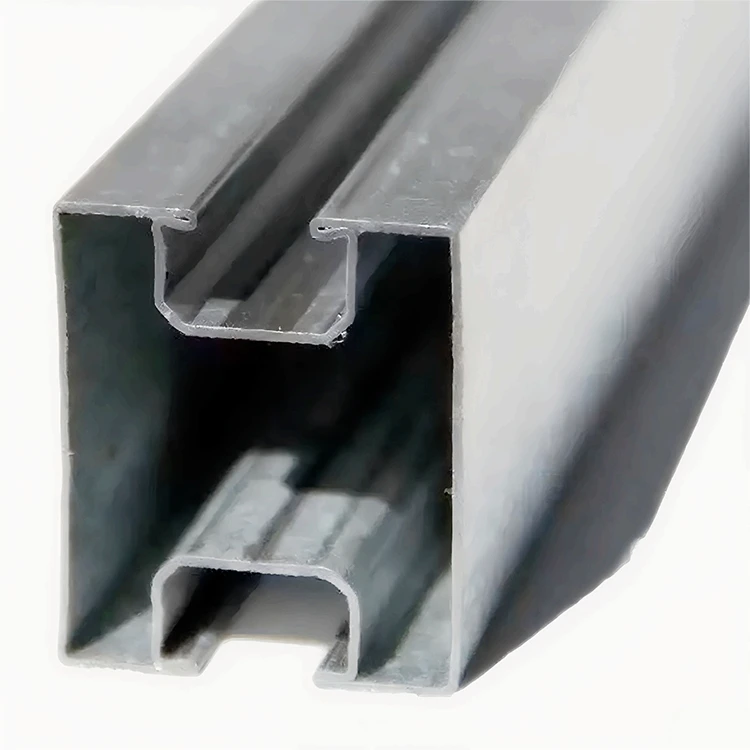
In the photovoltaic industry, Solar Mounting Rail Solar Panel Mounting Rail Aluminum Alloy Rail are widely used. The anti - static properties of these guide rails are crucial in this industry. Solar panels are made of sensitive semiconductor materials that can be damaged by static discharges. Aluminum alloy guide rails are used to support and position the solar panels, ensuring that they are not exposed to static charges during installation and operation.
Moreover, in outdoor environments, static electricity can attract dust and dirt to the solar panels, reducing their efficiency. The anti - static properties of the aluminum alloy guide rails help to keep the solar panels clean, thereby maintaining their performance.
Maintenance and Enhancement of Anti - Static Properties
To maintain the anti - static properties of aluminum alloy guide rails, regular cleaning is essential. Dust and debris can accumulate on the surface of the guide rails, which can interfere with their electrical conductivity. Cleaning the guide rails with a mild detergent and water can help to remove these contaminants.

In some cases, it may be necessary to enhance the anti - static properties of the guide rails. This can be done by applying an anti - static coating. Anti - static coatings contain conductive materials that can further improve the dissipation of static charges. However, it is important to choose a coating that is compatible with the aluminum alloy and does not affect its mechanical properties.
Conclusion
The anti - static properties of aluminum alloy guide rails are a result of their high electrical conductivity. These properties make them suitable for a wide range of industries, including electronics manufacturing, food and pharmaceutical, automotive, and photovoltaic industries. When compared to other types of guide rails, aluminum alloy guide rails offer a reliable and cost - effective solution for applications where anti - static properties are required.
If you are in need of high - quality aluminum alloy guide rails with excellent anti - static properties, we are here to assist you. Our products are designed to meet the strictest industry standards and can be customized to your specific requirements. Contact us for more information and to start a procurement discussion.
References
- ASM Handbook Committee. (2001). ASM Handbook Volume 2: Properties and Selection: Nonferrous Alloys and Special - Purpose Materials. ASM International.
- Metals Handbook Committee. (1990). Metals Handbook Desk Edition. ASM International.
- Kutz, M. (2012). Mechanical Engineers' Handbook: Materials and Mechanical Design. John Wiley & Sons.