

As a leading Aluminum Alloy Guide Rail supplier, I've delved deep into the world of these essential components. Aluminum alloy guide rails are widely used in various industries, from photovoltaic systems to mechanical engineering, due to their excellent strength - to - weight ratio, corrosion resistance, and ease of fabrication. However, one of the critical challenges in their application is wear and tear, which can significantly reduce their lifespan and performance. In this blog, I'll explore the abrasion - resistant coatings available for aluminum alloy guide rails.
Why Abrasion - Resistant Coatings Matter
Aluminum alloy guide rails often operate in harsh environments where they are subject to friction, sliding, and contact with abrasive particles. Without proper protection, the surface of the guide rail can quickly wear down, leading to dimensional changes, increased friction, and ultimately, system failure. Abrasion - resistant coatings act as a protective barrier, shielding the underlying aluminum alloy from direct contact with abrasive elements and reducing the rate of wear.
Types of Abrasion - Resistant Coatings for Aluminum Alloy Guide Rails
1. Ceramic Coatings
Ceramic coatings are known for their high hardness and excellent wear resistance. They are typically composed of inorganic compounds such as aluminum oxide (Al₂O₃), titanium dioxide (TiO₂), or zirconium dioxide (ZrO₂). These coatings can be applied to aluminum alloy guide rails through processes like thermal spraying or chemical vapor deposition (CVD).
Thermal spraying involves heating the ceramic material to a molten or semi - molten state and then spraying it onto the surface of the guide rail. This creates a thick, adherent coating that can withstand high levels of abrasion. CVD, on the other hand, is a more precise process where the ceramic coating is formed through a chemical reaction on the surface of the substrate.
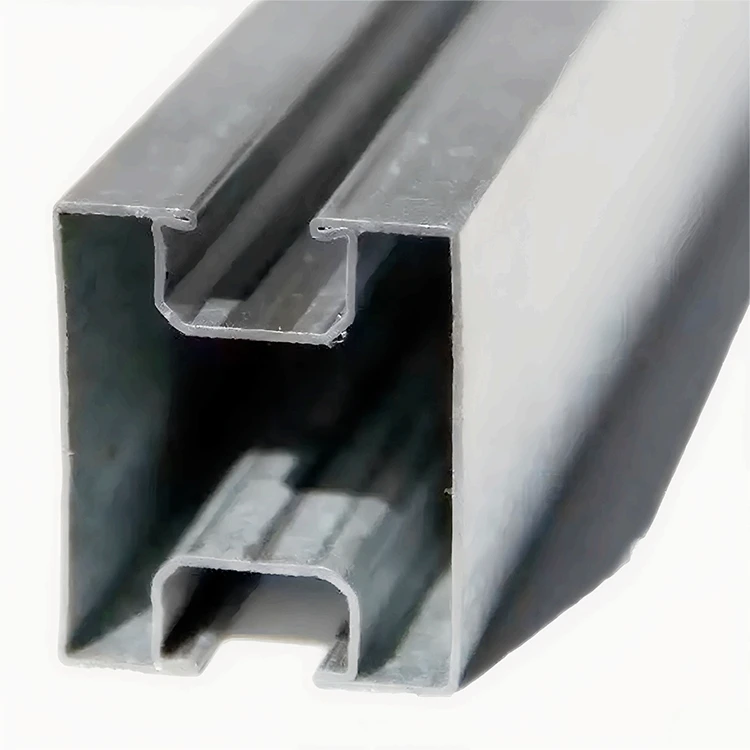

Ceramic coatings offer several advantages. They have a low coefficient of friction, which means they can reduce the energy required for the movement of objects along the guide rail. Additionally, they are chemically inert, making them resistant to corrosion in many environments. However, ceramic coatings can be brittle, and if the guide rail is subjected to high - impact forces, the coating may crack or delaminate.
2. Polymer Coatings
Polymer coatings are another popular choice for abrasion - resistant applications. They are made from organic polymers such as polyurethane, epoxy, or polyvinyl chloride (PVC). Polymer coatings can be applied through methods like dipping, spraying, or brushing.
Polyurethane coatings, in particular, are well - suited for aluminum alloy guide rails. They have good flexibility, which allows them to absorb shocks and vibrations without cracking. They also offer excellent adhesion to the aluminum surface and can provide a smooth finish, reducing friction. Epoxy coatings, on the other hand, are known for their high chemical resistance and can protect the guide rail from both abrasion and corrosion.
One of the main advantages of polymer coatings is their ease of application. They can be applied in a variety of thicknesses, depending on the specific requirements of the application. However, polymer coatings may have a lower hardness compared to ceramic coatings, and they may degrade over time when exposed to high temperatures or ultraviolet (UV) radiation.
3. Diamond - Like Carbon (DLC) Coatings
Diamond - Like Carbon coatings are a relatively new type of abrasion - resistant coating. They are composed of carbon atoms arranged in a structure similar to that of diamond, which gives them exceptional hardness and wear resistance. DLC coatings can be applied to aluminum alloy guide rails using physical vapor deposition (PVD) techniques.
DLC coatings have a very low coefficient of friction, which makes them ideal for applications where smooth movement is required. They also have good chemical stability and can resist corrosion in many environments. Additionally, DLC coatings are biocompatible, which is an advantage in applications such as medical devices.
However, the cost of applying DLC coatings is relatively high compared to other types of coatings. Also, the adhesion of DLC coatings to aluminum alloy substrates can be a challenge, and proper surface preparation is required to ensure a strong bond.
4. Metal - Based Coatings
Metal - based coatings, such as nickel - based or chromium - based coatings, can also be used to improve the abrasion resistance of aluminum alloy guide rails. These coatings can be applied through electroplating or electroless plating processes.
Nickel - based coatings are known for their good wear resistance and corrosion protection. They can be deposited in a range of thicknesses, and their properties can be tailored by adding other elements such as phosphorus or boron. Chromium coatings, on the other hand, have a very hard surface and a low coefficient of friction. They are commonly used in applications where high - precision and low - friction movement are required.
One of the limitations of metal - based coatings is that they may introduce additional weight to the guide rail. Also, some metals used in these coatings, such as hexavalent chromium, can be toxic, and their use is subject to environmental regulations.
Factors to Consider When Choosing an Abrasion - Resistant Coating
When selecting an abrasion - resistant coating for aluminum alloy guide rails, several factors need to be considered:
1. Operating Environment
The environment in which the guide rail will operate plays a crucial role in coating selection. If the guide rail is exposed to high temperatures, a ceramic or DLC coating may be more suitable, as they have better thermal stability. In corrosive environments, a polymer or metal - based coating with good corrosion resistance should be chosen.
2. Load and Friction Requirements
The amount of load that the guide rail will carry and the level of friction involved in its operation are important considerations. For high - load applications, a harder coating such as a ceramic or DLC coating may be necessary. For applications where low friction is critical, a coating with a low coefficient of friction, such as a polymer or DLC coating, should be selected.
3. Cost
The cost of the coating, including the cost of materials and the application process, is an important factor. Some coatings, such as DLC coatings, are more expensive than others. It's important to balance the cost with the performance requirements of the application.
Our Products and Coating Solutions
As an Aluminum Alloy Guide Rail supplier, we offer a wide range of products, including Aluminum Alloy Guide Rail, Solar Mounting Rail Solar Panel Mounting Rail Aluminum Alloy Rail, and Zinc - Aluminum - Magnesium Guide Rail. We understand the importance of abrasion - resistant coatings in ensuring the long - term performance of our guide rails.
We work closely with our customers to understand their specific requirements and recommend the most suitable coating solution. Whether it's a ceramic coating for high - wear applications or a polymer coating for a cost - effective solution, we have the expertise and resources to provide high - quality coated guide rails.
Contact Us for Procurement and Consultation
If you are in the market for high - quality aluminum alloy guide rails with abrasion - resistant coatings, we invite you to contact us. Our team of experts is ready to assist you in choosing the right product and coating solution for your application. We can provide detailed product information, samples, and pricing. Let's work together to ensure the success of your projects.
References
- "Handbook of Coating Technology" by T. Provder
- "Surface Engineering for Wear Resistance" by K. C. Ludema
- "Aluminum Alloys: Structure and Properties" by G. E. Totten and D. Scott MacKenzie