

Hey there! I'm a supplier of Aluminum Alloy Guide Rails, and I've been in this business for quite a while. Over the years, I've learned a thing or two about how to improve the performance of these guide rails. So, I thought I'd share some of my insights with you all.
First off, let's talk about what we mean by "performance." When it comes to aluminum alloy guide rails, performance can refer to a few different things. It could mean how well the guide rail can withstand wear and tear, how smoothly it allows objects to move along it, or how resistant it is to corrosion. These are all important factors that can affect the overall quality and lifespan of the guide rail.
Material Selection
One of the most crucial steps in improving the performance of aluminum alloy guide rails is choosing the right material. Not all aluminum alloys are created equal, and different alloys have different properties that can impact the guide rail's performance.
For instance, some alloys are more resistant to corrosion than others. If your guide rails are going to be used in an environment where they'll be exposed to moisture or chemicals, you'll want to choose an alloy that has good corrosion resistance. One option is the Zinc-Aluminum-Magnesium Guide Rail. This type of guide rail combines the benefits of zinc, aluminum, and magnesium, resulting in a material that's highly resistant to corrosion.
Another factor to consider is the strength of the alloy. If your guide rails will be supporting heavy loads or experiencing a lot of stress, you'll need an alloy that has high strength. Some aluminum alloys are specifically designed to be strong and durable, making them ideal for applications where performance is key.
Manufacturing Process
The manufacturing process also plays a big role in determining the performance of aluminum alloy guide rails. A well-manufactured guide rail will have a smooth surface finish, precise dimensions, and consistent quality.
One important aspect of the manufacturing process is extrusion. Extrusion is the process of forcing the aluminum alloy through a die to create the desired shape of the guide rail. During extrusion, it's important to control the temperature, speed, and pressure to ensure that the guide rail has the right properties.
Another step in the manufacturing process is heat treatment. Heat treatment can improve the strength and hardness of the aluminum alloy, making the guide rail more resistant to wear and deformation. There are different types of heat treatment processes, such as annealing, quenching, and tempering, and the choice of process depends on the specific alloy and the desired properties of the guide rail.
Surface Treatment
Surface treatment is another way to enhance the performance of aluminum alloy guide rails. A good surface treatment can protect the guide rail from corrosion, reduce friction, and improve its appearance.
One common surface treatment for aluminum alloy guide rails is anodizing. Anodizing creates a protective oxide layer on the surface of the guide rail, which makes it more resistant to corrosion and wear. Anodized guide rails also have a smooth and shiny finish, which can improve their aesthetic appeal.
Another option is powder coating. Powder coating involves applying a dry powder to the surface of the guide rail and then baking it to form a hard and durable finish. Powder coating can provide excellent protection against corrosion, as well as a wide range of colors and finishes to choose from.
Design Optimization
The design of the aluminum alloy guide rail can also have a significant impact on its performance. A well-designed guide rail will be able to support the intended load, allow for smooth movement, and minimize friction.
When designing a guide rail, it's important to consider the shape and dimensions of the rail. For example, a guide rail with a wider base will be more stable and better able to support heavy loads. The profile of the guide rail can also affect its performance. Some profiles are designed to reduce friction and improve the smoothness of movement, while others are optimized for specific applications.
Another aspect of design optimization is the use of features such as grooves, holes, or flanges. These features can be used to attach the guide rail to other components, guide the movement of objects along the rail, or provide additional support.
Maintenance and Inspection
Finally, proper maintenance and inspection are essential for ensuring the long-term performance of aluminum alloy guide rails. Regular maintenance can help prevent problems such as corrosion, wear, and misalignment, while inspection can help detect any issues early on so that they can be addressed before they become serious.
Some maintenance tasks for aluminum alloy guide rails include cleaning the rails regularly to remove dirt and debris, lubricating the moving parts to reduce friction, and checking for any signs of damage or wear. It's also important to inspect the guide rails periodically to ensure that they're still in good condition and functioning properly.
During inspection, look for signs of corrosion, cracks, or deformation. If you notice any issues, it's important to take action immediately to prevent further damage. This could involve replacing the damaged parts, repairing the guide rail, or adjusting the installation.

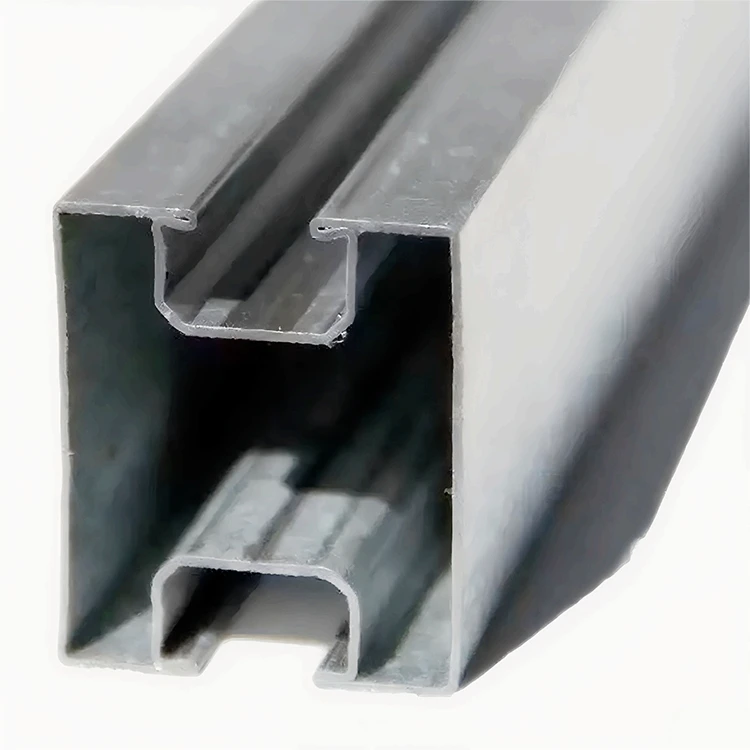
In conclusion, improving the performance of aluminum alloy guide rails requires a combination of factors, including material selection, manufacturing process, surface treatment, design optimization, and maintenance. By paying attention to these aspects, you can ensure that your guide rails will perform well and last for a long time.
If you're in the market for high-quality Aluminum Alloy Guide Rail or Solar Mounting Rail Solar Panel Mounting Rail Aluminum Alloy Rail, I'd love to have a chat with you. Whether you have questions about our products, need help with design or installation, or are ready to place an order, don't hesitate to reach out. Let's work together to find the best solution for your needs.
References
- ASM Handbook Committee. (2000). ASM Handbook Volume 2: Nonferrous Alloys and Special-Purpose Materials. ASM International.
- Davis, J. R. (Ed.). (2001). Aluminum and Aluminum Alloys. ASM International.
- Schaeffler, R. W. (1974). The Superalloys. American Society for Metals.