

In the world of industrial manufacturing and automation, repeatability is a cornerstone of quality and efficiency. It refers to the ability of a process to produce consistent results over multiple iterations. One often-overlooked component that plays a crucial role in achieving this repeatability is the guide rail. As a guide rail supplier, I've witnessed firsthand how these seemingly simple devices can have a profound impact on the reliability and precision of various processes. In this blog post, I'll explore the ways in which guide rails contribute to process repeatability and why they are an essential investment for any operation that values consistency and quality.
Understanding the Basics of Guide Rails
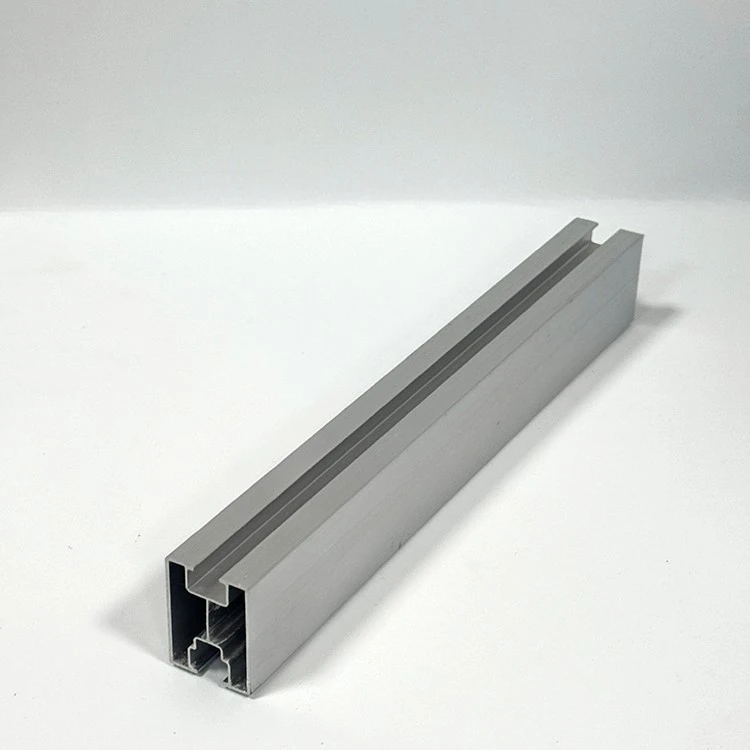
Before delving into how guide rails enhance repeatability, it's important to understand what they are and how they work. Guide rails are linear motion components that provide a smooth and stable path for moving parts. They are typically made of high-strength materials such as steel, aluminum alloy, or zinc-aluminum-magnesium, and are designed to withstand heavy loads and constant use. Guide rails come in various shapes and sizes, depending on the specific application, and can be used in a wide range of industries, including automotive, aerospace, electronics, and robotics.
There are several types of guide rails available on the market, each with its own unique features and benefits. Some of the most common types include ball screw guide rails, linear ball bearings, and roller guide rails. Ball screw guide rails use a series of ball bearings to reduce friction and provide smooth, precise motion. Linear ball bearings, on the other hand, are designed to support radial and axial loads and are ideal for applications that require high-speed movement. Roller guide rails, meanwhile, use rollers instead of ball bearings to provide greater load capacity and stiffness.

How Guide Rails Contribute to Repeatability
Now that we have a basic understanding of guide rails, let's explore how they contribute to process repeatability. There are several key ways in which guide rails can enhance the consistency and precision of a process, including:
1. Reducing Friction and Wear
One of the primary functions of guide rails is to reduce friction and wear between moving parts. By providing a smooth and stable surface for the parts to slide or roll on, guide rails minimize the amount of resistance and heat generated during operation. This not only extends the lifespan of the components but also ensures that the process remains consistent over time. For example, in a manufacturing process where a machine tool is used to cut or shape a workpiece, the guide rails help to keep the tool in the correct position and prevent it from deviating from the intended path. This results in more accurate and repeatable cuts, which ultimately leads to higher-quality products.
2. Providing Precise Guidance
Guide rails are designed to provide precise guidance for moving parts, ensuring that they follow a specific path or trajectory. This is particularly important in applications where accuracy and repeatability are critical, such as in the assembly of electronic components or the positioning of robotic arms. By using high-precision guide rails, manufacturers can ensure that their products are assembled with the highest level of accuracy and consistency, reducing the risk of defects and improving overall quality. For instance, in the production of solar panels, guide rails are used to position the panels accurately during the assembly process, ensuring that they are aligned correctly and that the electrical connections are made properly. This helps to maximize the efficiency of the solar panels and ensures that they perform consistently over their lifespan.
3. Supporting Heavy Loads
Another important benefit of guide rails is their ability to support heavy loads. In many industrial applications, moving parts are required to carry significant weights, such as in the case of conveyor systems or material handling equipment. Guide rails are designed to withstand these loads and provide a stable platform for the parts to move on. This not only ensures the safety and reliability of the equipment but also helps to maintain the repeatability of the process. For example, in a warehouse where a conveyor system is used to transport goods from one location to another, the guide rails help to support the weight of the goods and ensure that the conveyor belt moves smoothly and consistently. This reduces the risk of jams or breakdowns and ensures that the goods are transported efficiently and accurately.
4. Minimizing Vibration and Noise
Guide rails can also help to minimize vibration and noise during operation. Vibration and noise can have a negative impact on the performance and reliability of a process, as well as on the comfort and safety of the operators. By using high-quality guide rails that are designed to dampen vibrations and reduce noise, manufacturers can improve the overall quality of their products and create a more comfortable and productive working environment. For example, in a printing press, guide rails are used to support the printing plates and ensure that they move smoothly and quietly during the printing process. This helps to reduce the amount of vibration and noise generated by the press, resulting in higher-quality prints and a more pleasant working environment for the operators.
Choosing the Right Guide Rail for Your Application
When it comes to choosing the right guide rail for your application, there are several factors to consider. These include the type of motion required, the load capacity, the precision requirements, and the environmental conditions. Here are some tips to help you choose the right guide rail for your needs:
1. Determine the Type of Motion
The first step in choosing a guide rail is to determine the type of motion required for your application. This will depend on the specific task that the guide rail will be used for, such as linear motion, rotary motion, or a combination of both. Once you have determined the type of motion, you can choose a guide rail that is designed to support that type of motion. For example, if you need a guide rail for linear motion, you might consider a ball screw guide rail or a linear ball bearing. If you need a guide rail for rotary motion, you might consider a roller guide rail or a pivot bearing.
2. Consider the Load Capacity
The load capacity of the guide rail is another important factor to consider. This refers to the maximum weight that the guide rail can support without experiencing excessive wear or damage. When choosing a guide rail, it's important to select one that has a load capacity that is appropriate for your application. This will ensure that the guide rail can handle the weight of the moving parts and provide a stable platform for them to move on. For example, if you are using a guide rail in a heavy-duty application, such as a construction equipment or a mining machine, you will need a guide rail that has a high load capacity.
3. Evaluate the Precision Requirements
The precision requirements of your application will also play a role in choosing the right guide rail. This refers to the level of accuracy and repeatability that is required for the moving parts to perform their tasks. If your application requires high precision, such as in the manufacturing of electronic components or the assembly of medical devices, you will need a guide rail that has a high level of precision. This might include a guide rail that is made of high-quality materials and has a precise manufacturing process. For example, if you need a guide rail for a semiconductor manufacturing process, you might consider a guide rail that has a precision of less than a micron.
4. Consider the Environmental Conditions
Finally, it's important to consider the environmental conditions in which the guide rail will be used. This includes factors such as temperature, humidity, dust, and chemicals. If the guide rail will be used in a harsh environment, such as a manufacturing plant or an outdoor setting, you will need a guide rail that is designed to withstand these conditions. This might include a guide rail that is made of corrosion-resistant materials or has a protective coating. For example, if you are using a guide rail in a coastal area where there is a high level of saltwater corrosion, you might consider a guide rail that is made of stainless steel or has a zinc-aluminum-magnesium coating.
Our Guide Rail Products
As a guide rail supplier, we offer a wide range of guide rail products to meet the needs of various industries and applications. Our products include Solar Mounting Rail Solar Panel Mounting Rail Aluminum Alloy Rail, Zinc-Aluminum-Magnesium Guide Rail, and Aluminum Alloy Guide Rail.
Our solar mounting rails are made of high-quality aluminum alloy, which provides excellent corrosion resistance and durability. They are designed to support solar panels and ensure that they are installed securely and accurately. Our zinc-aluminum-magnesium guide rails are ideal for applications that require high strength and corrosion resistance. They are made of a special alloy that provides superior protection against rust and other forms of corrosion. Our aluminum alloy guide rails are lightweight and easy to install, making them a popular choice for a wide range of applications.
Contact Us for Procurement and Negotiation
If you are interested in our guide rail products or have any questions about how guide rails can contribute to the repeatability of your process, please feel free to contact us. Our team of experts is available to provide you with more information and help you choose the right guide rail for your needs. We look forward to working with you to improve the efficiency and quality of your operations.
References
- Groover, M. P. (2010). Fundamentals of Modern Manufacturing: Materials, Processes, and Systems. John Wiley & Sons.
- Budynas, R. G., & Nisbett, J. K. (2011). Shigley's Mechanical Engineering Design. McGraw-Hill.
- Norton, R. L. (2004). Design of Machinery: An Introduction to the Synthesis and Analysis of Mechanisms and Machines. McGraw-Hill.